

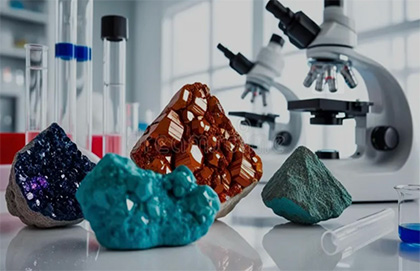
The first stage of a project evaluation is a comprehensive laboratory analysis of representative samples to determine project feasibility and development of a conceptual process design.
A low-volume trial program is designed to validate selected process equipment and to confirm capacity and potential process efficiencies as part of a comprehensive engineering study prior to deployment.
Trial outcomes are assessed to determine the scale and application of each process component, confirming the front-end conceptual engineering design, project economics and feasibility.

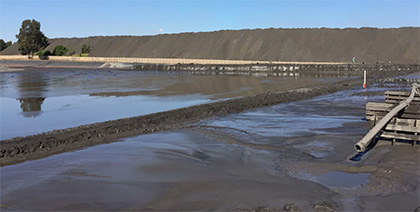
The R3-Process produces high-purity resource concentrates from ore bodies, discard tailings, and process-waste streams, achieving a 99% liberation of Critical Raw Materials (CRMs), significantly increasing yields and economics of the extractive metallurgy process.
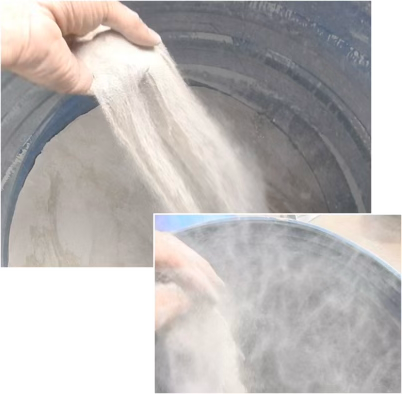
Post-process tailings are transformed into a highly activated pozzolan, an extender for Portland cement to reduce CO₂ emissions, used for production of geopolymers, LC3 cement or as a sandblasting and water-jet cutting media.
The RCD milling process uses a supersonic vortex for adiabatic heat exchange, achieving cryogenic temperatures, ultra-low vacuum and micro-process of explosive decompression, to significantly enhance liberation, separation, and recovery of valuable CRMs from waste.
The RCD uniquely mills dry or wet materials from 10 mm to <30 μm in a single pass with sublimation (freeze-drying). The RCD mill activates amorphous glass slag into a highly reactive pozzolan powder.
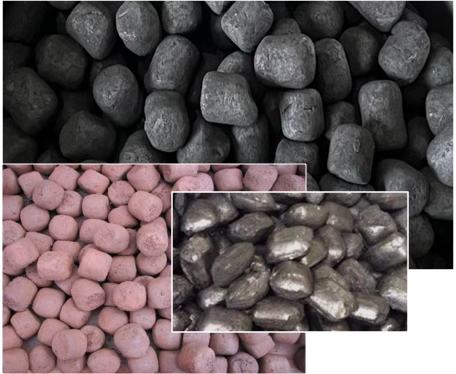
WRAM agglomerates fines into WRAM-ROX (briquettes or pelletized) e.g. fine coal for gasification or combustion or smelt-ready pelletized concentrates, which can incorporate thermites, fluxes and reductants, reducing energy requirements by up to 30% whilst requiring 50% less carbon for smelting.
WRAM ensures consistent quality and composition, offering a sustainable solution for mineral processing or recovery of CRMs
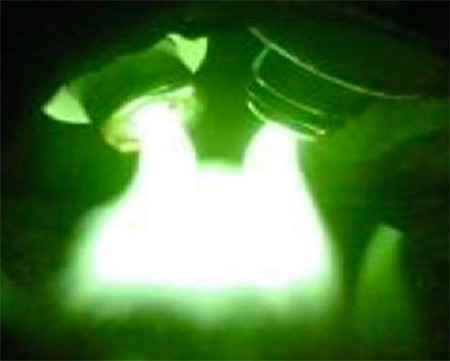
The IRF, a world’s first plasma-over-induction furnace, delivers a paradigm shift in how mineral oxides are smelted into base metals/alloys, including titanium and refractory metals.
The EESTech-patented IRF increases efficiencies, significantly reduces the energy demand and carbon footprint of smelting. The ultra-high-temperature of the plasma arcs crack the silica-alumina matrix to increase yields by up to 38%, reducing noxious off-gases, ensuring stringent air-emission standards are met.

Our proprietary ozone process features on-demand generation, optimized mass transfer, and closed-loop control for fast, residue-free disinfection and oxidation in industrial, food and hazardous leachate applications.
It eliminates microbes and biofilms, removes odors and organics, enhances clarity and hygiene, with zero chemical residues. Key advantages stem from precise, high-performance ozone water treatment, custom-engineered to efficiently meet and exceed hygiene and environmental regulations.
Our proprietary nano-bubble + ozone (NanOzone™) process destroys PFAS, chlorinated compounds and recalcitrant organics that fail conventional methods. NanOzone™ extend ozone contact time and reactivity, accelerating breakdown without higher doses or added chemicals.
The residue-free process reduces toxicity, improves treatability, and meets strict regulations. No secondary waste, low footprint, scalable, fast, clean, tailored PFAS and persistent contaminant destruction using NanOzone™.